
Homeownership comes with its fair share of challenges, but few issues are as daunting as a problem with your sewer line. Whether it’s slow drains, unpleasant odors, or worse, a sewage backup these warning signs signal that your sewer line needs attention.
The big question for most homeowners is whether to repair the existing pipe or replace the sewer line altogether. Both options have their merits, but choosing the right one depends on several factors. Let’s dive in and help you decide what’s best for your home and budget.
Understanding Sewer Line Issues
Before weighing your options, it’s important to understand what sewer line problems typically involve. Over time, sewer pipes can crack, collapse, or become clogged due to various reasons:
- Aging Pipes: Older homes often have clay or cast-iron pipes that deteriorate with age.
- Tree Root Intrusion: Roots can invade small cracks in the line, causing blockages and leaks.
- Ground Shifting: Natural soil movement can misalign or break pipes.
- Corrosion and Wear: Pipes can corrode from the inside out, especially if water has a high mineral content.
Identifying the root cause is the first step, usually accomplished through a sewer camera inspection.
Sewer Line Repair: Pros and Cons
Pros:
- Cost-Effective
Repairing a sewer line is often less expensive than replacing it. Minor cracks or isolated leaks can be fixed without extensive excavation.
- Faster Process
Repairs usually take less time and cause minimal disruption to your property. In many cases, you can use your plumbing again within a day.
- Less Invasive
Modern techniques like trenchless pipe lining allow repairs without digging up your yard, patio, or driveway.
Cons:
- Not Always a Permanent Solution
If your pipe is old or severely damaged, repairs might only serve as a temporary fix. You could be facing more problems in the near future.
- Limited Scope
Repairs only work for localized issues. Extensive damage or widespread deterioration often means replacing the line is the only long-term solution.
- Potential for Recurrence
If underlying causes, like tree roots, aren’t addressed, the problem might return.
Sewer Line Replacement: Pros and Cons
Pros:
- Long-Term Solution
Replacing your sewer line eliminates all existing issues and often comes with a long warranty. New materials like PVC or HDPE are more durable and less prone to future problems.
- Increased Property Value
A brand-new sewer line can be a selling point if you plan to move, reassuring buyers that they won’t face expensive plumbing repairs.
- Peace of Mind
With a new line, you won’t have to worry about repeated repairs or unexpected failures.
Cons:
- Higher Cost
Replacement is a bigger investment. Costs can run into the thousands, especially if extensive excavation or landscaping restoration is required.
- More Disruption
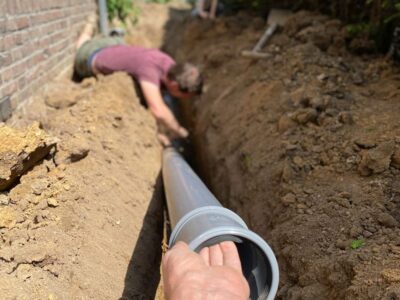
Traditional replacement methods involve digging trenches, which can disrupt your yard, driveway, or even sidewalks.
- Time-Consuming
Depending on the complexity, replacement can take several days, during which time your plumbing may be out of commission.
How to Decide: Repair or Replace Your Old or Defective Pipes
Choosing between repair and replacement boils down to the extent of the damage, the age of your plumbing, and your long-term plans for the home. Here’s when repair makes the most sense:
- The damage is localized to a small area.
- The pipe is relatively new and in otherwise good condition.
- You’re looking for a quick, budget-friendly fix.
- Trenchless repair methods are feasible for your situation.
When Replacement is Best:
- The pipe is old or made from outdated materials (like clay or cast iron).
- There are multiple problem areas or recurring issues.
- You plan to stay in your home long-term and want a permanent solution.
- The cost of repeated repairs rivals or exceeds the cost of replacement.
Trenchless Technology: (Changing the Game)
Thanks to technology, homeowners now have access to trenchless sewer repair and replacement methods. These include:
- Pipe Lining (Cured-in-Place Pipe): A resin-coated sleeve is inserted and inflated inside the old pipe, hardening to create a new pipe within the old one.
- Pipe Bursting: A new pipe is pulled through the old pipe, breaking the old pipe apart and replacing it simultaneously.
Trenchless methods are less invasive and often faster, but not suitable for every scenario—such as severely collapsed pipes or pipes with significant misalignment.
Some Final Thoughts from the Plumbing Experts
There’s no one-size-fits-all answer when it comes to sewer line repair versus replacement. A professional plumber can offer a camera inspection and expert advice tailored to your unique situation.
While repairs are often suitable for minor or isolated issues, replacement is the better investment for old or extensively damaged lines. In the long run, investing in your sewer system means peace of mind and fewer disruptions to your home life.
If you’re experiencing sewer line trouble, don’t wait until a small problem becomes a major headache. Consult a trusted professional and choose the solution that keeps your home running smoothly for years to come.